Buy wirtualnagra.pl ?
We are moving the project
wirtualnagra.pl .
Are you interested in purchasing the domain
wirtualnagra.pl ?
domain@kv-gmbh.de · 0541-91531010
Buy wirtualnagra.pl ?
What is an orthogonal vector?
An orthogonal vector is a vector that is perpendicular to another vector. In other words, two vectors are orthogonal if their dot product is zero. Geometrically, this means that the two vectors form a 90-degree angle with each other. Orthogonal vectors are important in many areas of mathematics and physics, including linear algebra and vector calculus. **
What does the term orthogonal mean?
The term orthogonal refers to two things being perpendicular or at right angles to each other. In mathematics, it often refers to vectors or matrices that are perpendicular to each other. In a broader sense, it can also refer to any two things that are independent or unrelated to each other. **

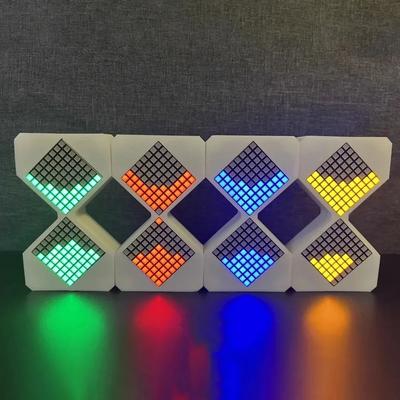
Similar search terms for Orthogonal
Top-Angebote
Products related to Orthogonal:
-
Youfap Market DIY Digital Cyber Hourglass Birthday Gift, Interactive LED Hourglass For Kids, Cyber Style With Glowing Technology square BlueTransform the ordinary into something extraordinary with the DIY Digital Cyber Hourglass! This innovative toy brings a futuristic glow to any room, making it the perfect birthday gift for kids who love unique, techinspired gadgets. With its striking...59,97 $*Shipping: 0,00 $Secure redirect to the provider
-
Tiny Tots Teens Trends Nostalgic Transparent Electronic Pets, Pixel Funny Virtual Cyber Digital Toy Keychain 11Bring back the charm of childhood with these Transparent Electronic Pets! Perfect for both kids and adults, this nostalgic virtual pet game brings fun pixel play and digital memories in a small, portable keychain size. With 168 pets to choose from,...23,97 $*Shipping: 0,00 $Secure redirect to the provider
-
Tiny Tots Teens Trends Nostalgic Transparent Electronic Pets, Pixel Funny Virtual Cyber Digital Toy Keychain 5Bring back the charm of childhood with these Transparent Electronic Pets! Perfect for both kids and adults, this nostalgic virtual pet game brings fun pixel play and digital memories in a small, portable keychain size. With 168 pets to choose from,...23,97 $*Shipping: 0,00 $Secure redirect to the provider
-
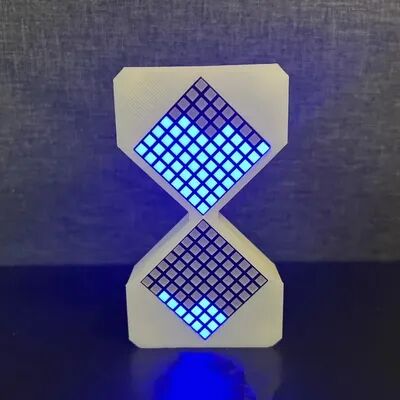
GlowBake DIY Digital Hourglass Birthday Gift Toy For Kids, Cyber Electronic Hourglass With Glow & Tech Style redElevate playtime and learning with our DIY Digital Hourglass Birthday Gift Toy a cyber electronic hourglass that merges modern tech style with timeless fun. Designed for kids and families, this electronic hourglass provides hours of educational...59,97 $*Shipping: 0,00 $Secure redirect to the provider



-
When are planes and lines orthogonal?
Planes and lines are orthogonal when the line is perpendicular to the plane. This means that the line forms a 90-degree angle with the plane, creating a right angle. In other words, the direction of the line is perpendicular to the direction of the plane. This relationship is important in geometry and engineering, as it affects the intersection and orientation of different geometric elements. **
-
Are linearly independent vectors always orthogonal?
No, linearly independent vectors are not always orthogonal. Linear independence means that no vector in the set can be written as a linear combination of the others, while orthogonality means that the vectors are perpendicular to each other. It is possible for linearly independent vectors to be orthogonal, but it is not a guarantee. For example, in three-dimensional space, the vectors (1, 0, 0), (0, 1, 0), and (0, 0, 1) are linearly independent and orthogonal, but the vectors (1, 1, 0) and (0, 1, 1) are linearly independent but not orthogonal. **
-
What is a proof of two orthogonal?
Two vectors are considered orthogonal if their dot product is equal to zero. This means that the angle between the two vectors is 90 degrees, forming a right angle. Mathematically, if vectors u and v are orthogonal, then u · v = 0. This property can be used to prove that two vectors are orthogonal by calculating their dot product and showing that it equals zero. **
-
How do you determine the orthogonal complement?
To determine the orthogonal complement of a subspace, you first need to find a basis for the subspace. Then, you can use the Gram-Schmidt process to find an orthogonal basis for the subspace. Finally, the orthogonal complement is the set of all vectors in the vector space that are orthogonal to every vector in the basis of the subspace. **
How do you calculate the orthogonal complement?
To calculate the orthogonal complement of a subspace, you first need to find a basis for the subspace. Then, you can use the Gram-Schmidt process to find an orthonormal basis for the subspace. Finally, the orthogonal complement is the set of all vectors in the vector space that are orthogonal to every vector in the orthonormal basis of the subspace. **
What is a proof for two orthogonal?
Two vectors are orthogonal if their dot product is zero. This can be proven by calculating the dot product of the two vectors and showing that it equals zero. If the dot product is zero, it means that the vectors are perpendicular to each other, which is the definition of orthogonality in Euclidean space. **
Top-Angebote
Products related to Orthogonal:
-
Tiny Tots Teens Trends Nostalgic Transparent Electronic Pets, Pixel Funny Virtual Cyber Digital Toy Keychain 7Bring back the charm of childhood with these Transparent Electronic Pets! Perfect for both kids and adults, this nostalgic virtual pet game brings fun pixel play and digital memories in a small, portable keychain size. With 168 pets to choose from,...23,97 $*Shipping: 0,00 $Secure redirect to the provider
-
GlowBake DIY Digital Hourglass Birthday Gift Toy For Kids, Cyber Electronic Hourglass With Glow & Tech Style yellowElevate playtime and learning with our DIY Digital Hourglass Birthday Gift Toy a cyber electronic hourglass that merges modern tech style with timeless fun. Designed for kids and families, this electronic hourglass provides hours of educational...59,97 $*Shipping: 0,00 $Secure redirect to the provider
-
Youfap Market DIY Digital Cyber Hourglass Birthday Gift, Interactive LED Hourglass For Kids, Cyber Style With Glowing Technology square BlueTransform the ordinary into something extraordinary with the DIY Digital Cyber Hourglass! This innovative toy brings a futuristic glow to any room, making it the perfect birthday gift for kids who love unique, techinspired gadgets. With its striking...59,97 $*Shipping: 0,00 $Secure redirect to the provider
-
Tiny Tots Teens Trends Nostalgic Transparent Electronic Pets, Pixel Funny Virtual Cyber Digital Toy Keychain 11Bring back the charm of childhood with these Transparent Electronic Pets! Perfect for both kids and adults, this nostalgic virtual pet game brings fun pixel play and digital memories in a small, portable keychain size. With 168 pets to choose from,...23,97 $*Shipping: 0,00 $Secure redirect to the provider
-
What is an orthogonal vector?
An orthogonal vector is a vector that is perpendicular to another vector. In other words, two vectors are orthogonal if their dot product is zero. Geometrically, this means that the two vectors form a 90-degree angle with each other. Orthogonal vectors are important in many areas of mathematics and physics, including linear algebra and vector calculus. **
-
What does the term orthogonal mean?
The term orthogonal refers to two things being perpendicular or at right angles to each other. In mathematics, it often refers to vectors or matrices that are perpendicular to each other. In a broader sense, it can also refer to any two things that are independent or unrelated to each other. **
-
When are planes and lines orthogonal?
Planes and lines are orthogonal when the line is perpendicular to the plane. This means that the line forms a 90-degree angle with the plane, creating a right angle. In other words, the direction of the line is perpendicular to the direction of the plane. This relationship is important in geometry and engineering, as it affects the intersection and orientation of different geometric elements. **
-
Are linearly independent vectors always orthogonal?
No, linearly independent vectors are not always orthogonal. Linear independence means that no vector in the set can be written as a linear combination of the others, while orthogonality means that the vectors are perpendicular to each other. It is possible for linearly independent vectors to be orthogonal, but it is not a guarantee. For example, in three-dimensional space, the vectors (1, 0, 0), (0, 1, 0), and (0, 0, 1) are linearly independent and orthogonal, but the vectors (1, 1, 0) and (0, 1, 1) are linearly independent but not orthogonal. **
Similar search terms for Orthogonal
-
Tiny Tots Teens Trends Nostalgic Transparent Electronic Pets, Pixel Funny Virtual Cyber Digital Toy Keychain 5Bring back the charm of childhood with these Transparent Electronic Pets! Perfect for both kids and adults, this nostalgic virtual pet game brings fun pixel play and digital memories in a small, portable keychain size. With 168 pets to choose from,...23,97 $*Shipping: 0,00 $Secure redirect to the provider
-
GlowBake DIY Digital Hourglass Birthday Gift Toy For Kids, Cyber Electronic Hourglass With Glow & Tech Style redElevate playtime and learning with our DIY Digital Hourglass Birthday Gift Toy a cyber electronic hourglass that merges modern tech style with timeless fun. Designed for kids and families, this electronic hourglass provides hours of educational...59,97 $*Shipping: 0,00 $Secure redirect to the provider
-
GlowBake DIY Digital Hourglass Birthday Gift Toy For Kids, Cyber Electronic Hourglass With Glow & Tech Style greenElevate playtime and learning with our DIY Digital Hourglass Birthday Gift Toy a cyber electronic hourglass that merges modern tech style with timeless fun. Designed for kids and families, this electronic hourglass provides hours of educational...59,97 $*Shipping: 0,00 $Secure redirect to the provider
-
GlowBake DIY Digital Hourglass Birthday Gift Toy For Kids, Cyber Electronic Hourglass With Glow & Tech Style blueElevate playtime and learning with our DIY Digital Hourglass Birthday Gift Toy a cyber electronic hourglass that merges modern tech style with timeless fun. Designed for kids and families, this electronic hourglass provides hours of educational...59,97 $*Shipping: 0,00 $Secure redirect to the provider
-
What is a proof of two orthogonal?
Two vectors are considered orthogonal if their dot product is equal to zero. This means that the angle between the two vectors is 90 degrees, forming a right angle. Mathematically, if vectors u and v are orthogonal, then u · v = 0. This property can be used to prove that two vectors are orthogonal by calculating their dot product and showing that it equals zero. **
-
How do you determine the orthogonal complement?
To determine the orthogonal complement of a subspace, you first need to find a basis for the subspace. Then, you can use the Gram-Schmidt process to find an orthogonal basis for the subspace. Finally, the orthogonal complement is the set of all vectors in the vector space that are orthogonal to every vector in the basis of the subspace. **
-
How do you calculate the orthogonal complement?
To calculate the orthogonal complement of a subspace, you first need to find a basis for the subspace. Then, you can use the Gram-Schmidt process to find an orthonormal basis for the subspace. Finally, the orthogonal complement is the set of all vectors in the vector space that are orthogonal to every vector in the orthonormal basis of the subspace. **
-
What is a proof for two orthogonal?
Two vectors are orthogonal if their dot product is zero. This can be proven by calculating the dot product of the two vectors and showing that it equals zero. If the dot product is zero, it means that the vectors are perpendicular to each other, which is the definition of orthogonality in Euclidean space. **
* All prices are inclusive of VAT and, if applicable, plus shipping costs. The offer information is based on the details provided by the respective shop and is updated through automated processes. Real-time updates do not occur, so deviations can occur in individual cases. ** Note: Parts of this content were created by AI.